


Technical & Info
Specifications
Frequency Range: 14 - 80MHz
Gain: 5-11.5 dBI depending on frequency and height of antenna
SWR: SuperSig -4 <1.5.1: @14MHz SuperSig Sliderbeam <1.4.1 @14MHz Less than 1.2.1 on all other frequencies
Power Handling: 300w CW/FT8 700w SSB
Boom Length: SuperSig -4 1.22m (4ft) SuperSig Sliderbeam 1.83m (6ft)
Weight: SuperSig -4 2.3KG (5lbs) SuperSig Sliderbeam 2.7KG (5.9lbs)
Max Mast Diameter: 44mm (1.73”)*
Wind loading: 17.8mps (40mph) Retracted: 11.1mps (25mph) Fully Extended
Maximum Turning Radius: SuperSig -4 3m (9.8ft) SuperSig Sliderbeam 3.2m (10.5ft)
*Note: Wider mast plates available on request.
Download the MMANA Far Field Plots for the SuperSig SliderBeam (Opens in PDF format)
The Design
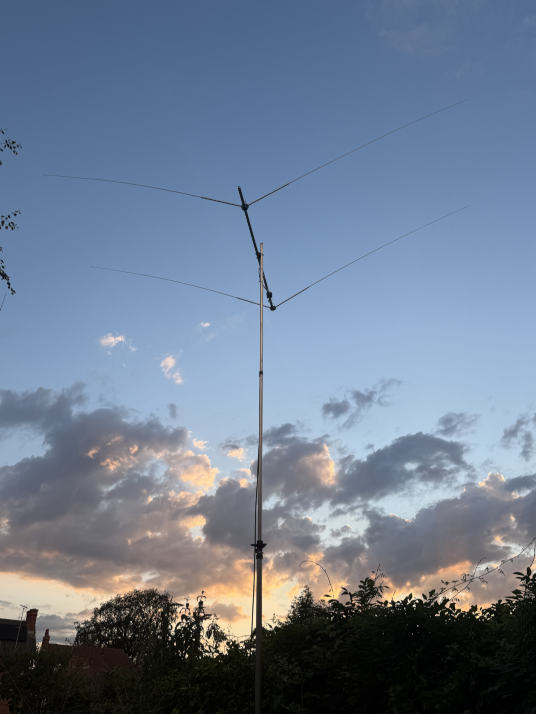
SuperSig antennas are aimed specifically at the POTA, BOTA, SOTA, Field Day and general /P operator. However, this is nowhere near an exclusive list. If, like me, you have limited outside space, or for various reasons you can't put up a permanent installation at home, the SuperSig can be the solution you have been waiting for. On moving QTH I really missed the ability to have a directional antenna with some gain - this design came to my rescue! The antenna can be quickly mounted or removed on my 33ft aluminum mast. This works great for a contest weekend, DX chasing or whatever takes your fancy!
Construction
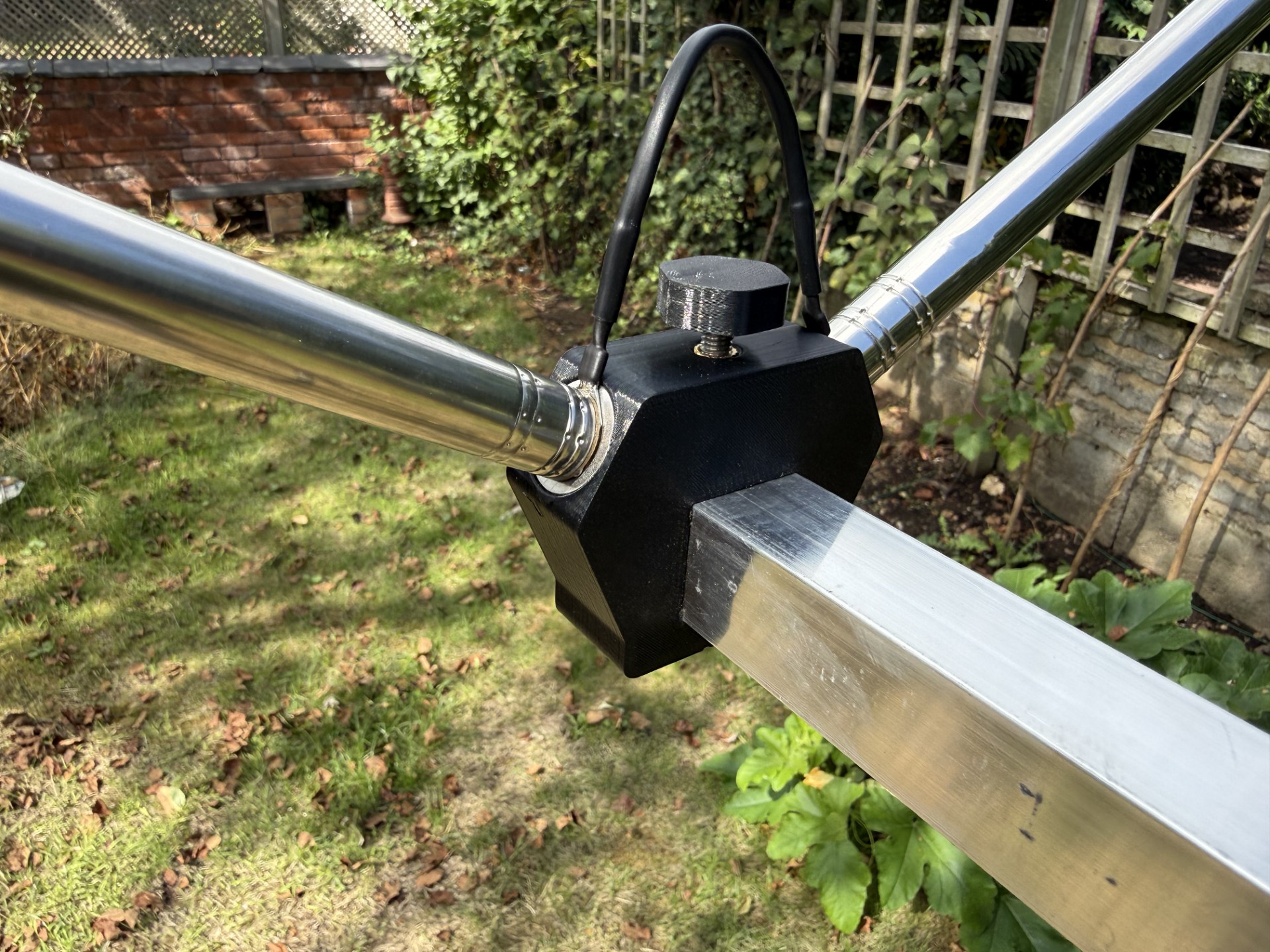
One of the many advantages of the SuperSig is its lightweight design. The 182cm (6ft) boom version comes in at just under 3kgs (7lbs) with the 122cm (4ft) version just over 2kgs (4.5lbs) including the carry case making it easy to transport and mount. Each element is made from a 5.6m (18ft) stainless steel telescopic whip connected to brass inserts embedded into the hub.
 Sliderbeam Hub
The director elements are bonded together with a fly lead made from coax braid, the fork connectors slide into the base of the whips. Driven elements are fastened in the same way and fed via a common mode choke to your transceiver. For more information please see the video: How to construct the SuperSig
